Machinery manufacturers have put a lot of effort into producing a solid and heavy baler over recent years. So (as a generalization) a contractor with newer gear should be able to make heavier and better-shaped bales than a contractor with older gear.
Here’s a few things to look for in a Hay contractor:
HD Baler
We strongly encourage engaging a contractor with a high-density baler. High density balers not only make heavier bales, but they are also much faster.
See our article on How much do hay bales weigh?
Moisture Monitoring System On Their Baler
A contractor who has a moisture monitoring system on their baler, such as a Gazeeka, should be sought. This enables the constant monitoring of moisture levels and can help you avoid stacking high moisture, potentially dangerous bales, into the shed and therefore mitigating the risk of Hay fires.
Fair Pricing Agreement
Most contractors charge per bale. Be very careful here. Lighter bales make more money for a contractor, while heavier bales mean less work stacking, loading and more profit for the grower. Lighter bales mean higher freight costs and a lower selling price for your Hay. Talk to your contractor about this — put bale weight parameters into your baling contract.
Written Contract
These days it is not uncommon for growers to have a written contract with the contractor. This is something to consider. When making a verbal or written contract, we strongly suggest you cover bale weights and timing.
Contractors can pick up other jobs and some contractors (not all) will give preference to larger jobs. We suggest you talk about this in your discussions and agreement with your chosen contractor.
You can find a full list of contractors from all around Australia on our Contractors Registry on our website. This registry is to help you find a contractor that will suit your needs. These contractors have a range of different equipment and specialities listed for your convenience. We encourage you to pick your own contractor.
Be sure to check out our Contractors Registry to find a contractor that we recommend.
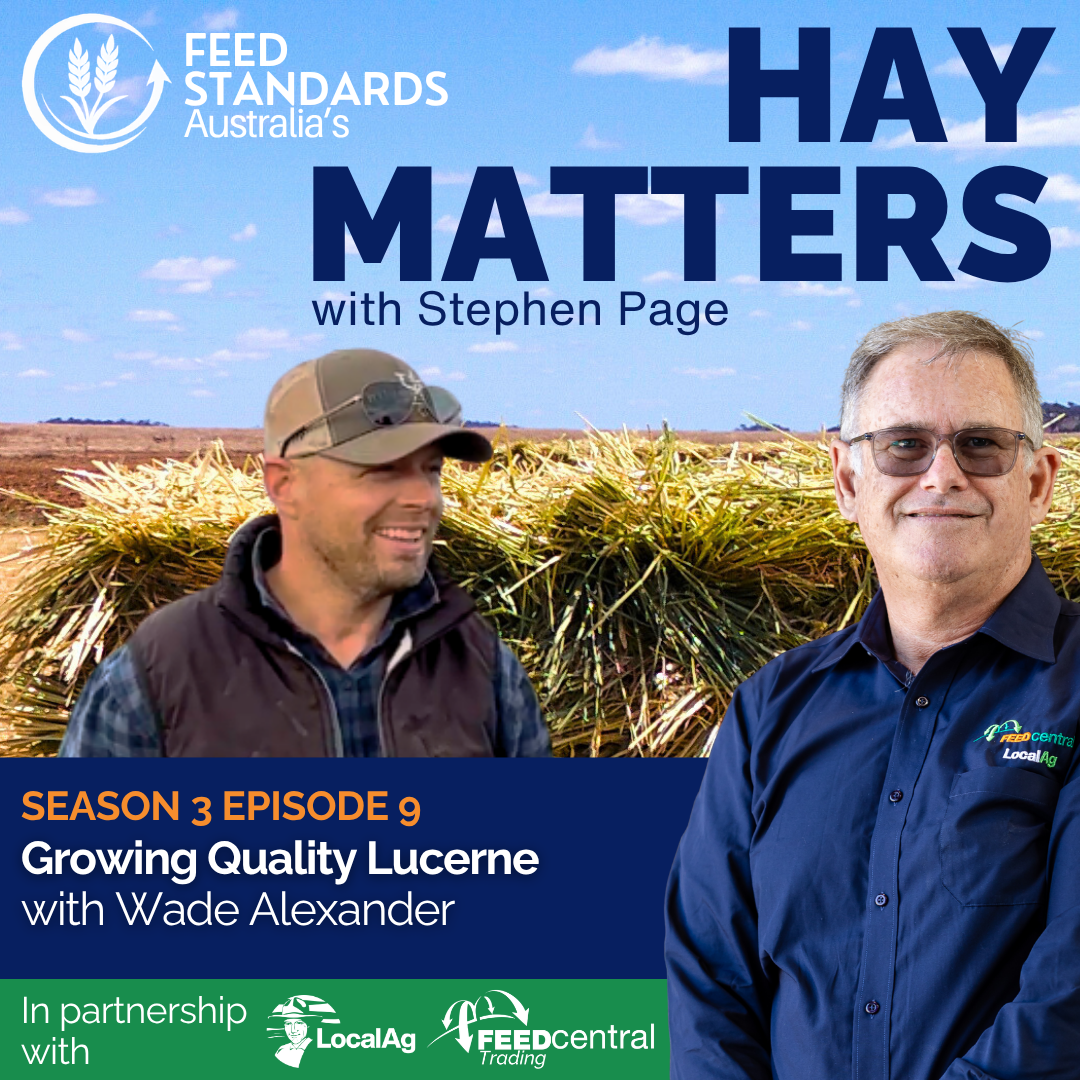
Growing quality lucerne with Wade Alexander

What goes into producing award-winning lucerne hay? In this episode, Steve Page joins Wade Alexander on farm to explore the practical decisions behind his National Lucerne Feed Test Award win. Walking through the paddocks, Wade shares his experiences with establishing and renewing lucerne stands, incorporating barley and oats, and adjusting his haymaking approach to the […]
Selenium in Hay and Silage: Test before you supplement
Why Test Hay and Silage for Selenium? Testing becomes particularly valuable when: hay or silage has been purchased from an unfamiliar district; fodder is being transported between regions; the farm is in a known low-selenium district; livestock are relying heavily on conserved forage rather than pasture; young or rapidly growing livestock are being fed; pregnant […]
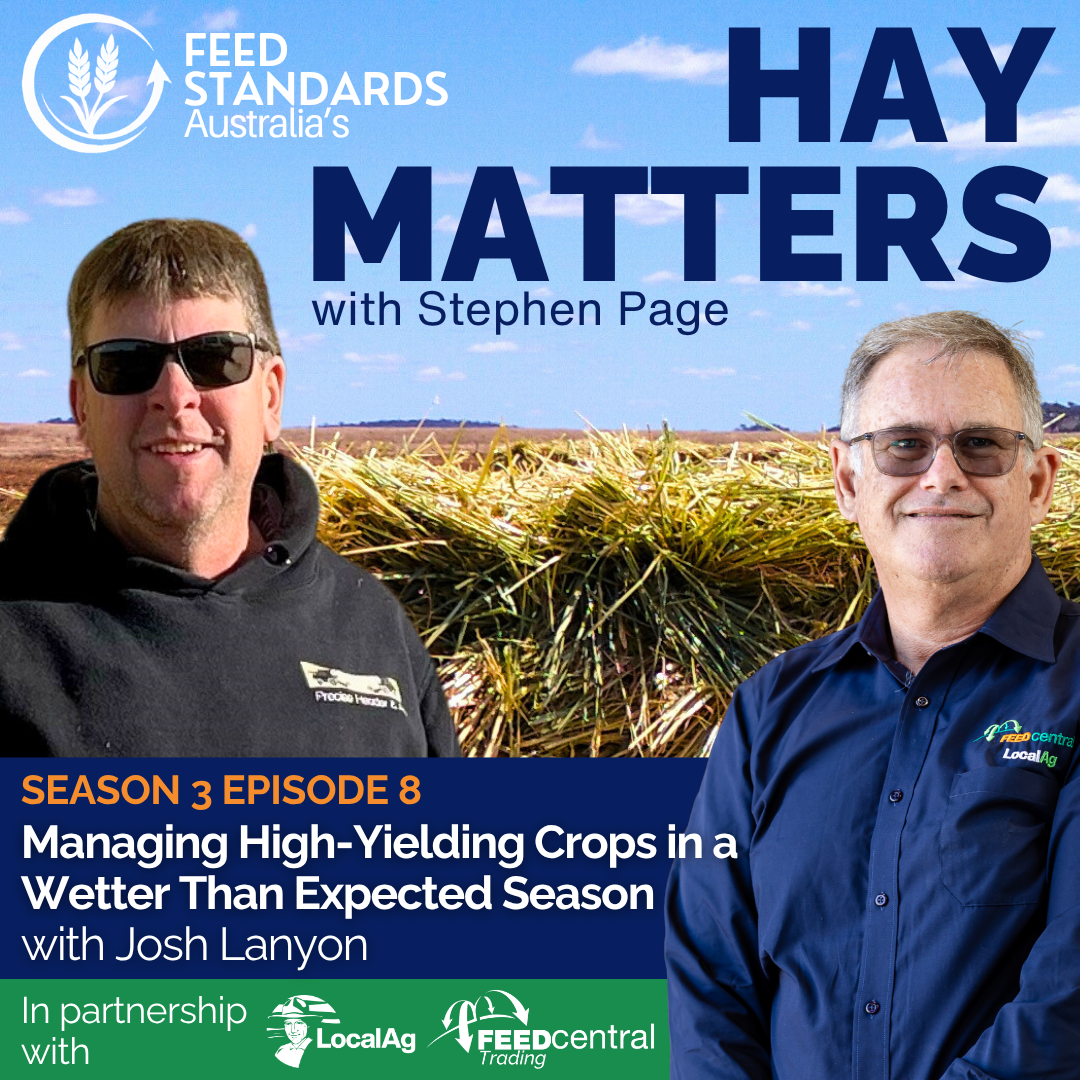
Managing High Yielding Crops in a wetter than expected season: with Victorian grower Josh Lanyon
In this episode of the Feed Standards Australia podcast, Steve Page catches up with returning guest Josh Lanyon from the Barraport area, Victoria, to discuss an unexpectedly wet growing season and the challenges of turning high-yielding crops into quality hay.