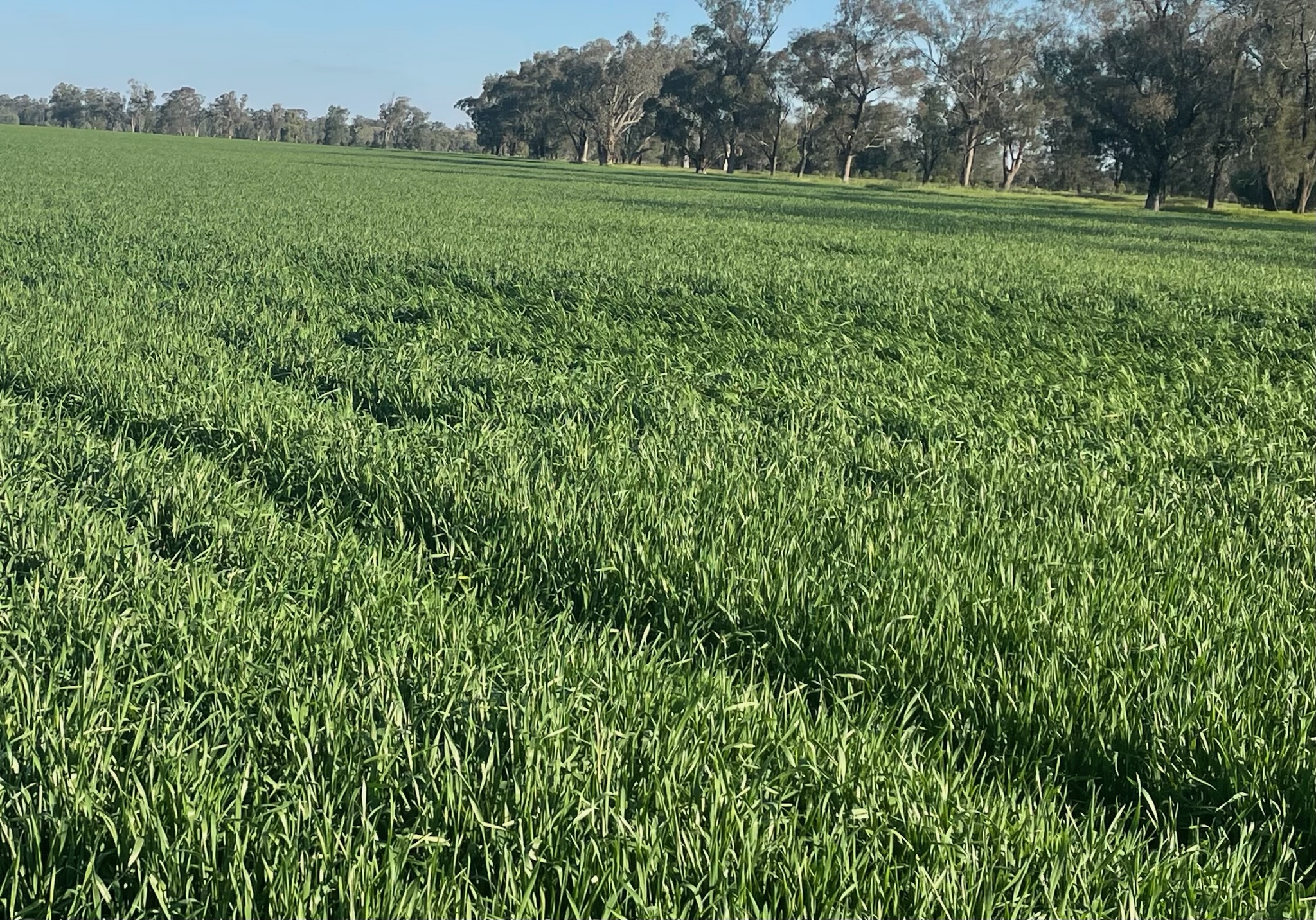
High-biomass cereal crops can offer strong grain or hay potential, but they need to be monitored closely as the season develops. A crop that looks excellent in winter can become difficult to harvest if excessive vegetative growth is followed by lodging, frost, moisture stress, strong winds, heavy rain or saturated soils.
Lodging occurs when the crop falls over, either through stem lodging, where the stem bends or breaks, or root lodging, where the plant is pushed over at the root. Tall crops, weak stems, shallow or restricted root systems and heavy heads can all increase the risk. Research has shown that lodging risk is strongly influenced by crop height, stem strength, root anchorage, variety, nutrition and seasonal conditions.
Managing crop growth and lodging risk
Variety selection is also important. Some varieties have considerably stronger straw and better lodging resistance than others. Selecting varieties suited to the paddock, yield potential and seasonal environment can reduce the risk before the crop is even sown. Sowing decisions also influence crop structure.
Nutrition management is another important consideration. Applying excessive early nitrogen can encourage a large, lush canopy that becomes difficult to support later in the season. Matching nutrition to realistic crop demand and seasonal yield potential can help reduce unnecessary vegetative growth.
Keep watching the crop as spring approaches
As stem elongation and head development approach, paddock inspections become increasingly important. Look beyond the crop’s overall appearance and assess the factors that will determine whether it can be harvested successfully, including:
- Variety lodging susceptibility
- Crop height, stem strength and the extent and direction of leaning or lodging
- Biomass and canopy density
- Root development, waterlogging and other soil constraints
- Crop maturity and remaining grain yield potential
- Nitrogen status
- Soil moisture and the likelihood of strong winds, frost, or heavy rain
- Paddock access for mowing, raking, baling and transport
- Contractor, machinery, labour and storage availability
Crops showing signs of leaning, lodging, frost damage or moisture stress should be monitored closely. Conditions can deteriorate quickly, and a compromised crop may become slower, more difficult or less profitable to harvest for grain.
Importantly, a whole-paddock plan may not be practical. Higher ground, low areas and lodged patches may require different treatment.
Keep the grain versus hay decision open
Depending on the issue and its severity, an affected crop can result in:
- Increased harvest losses
- Slower harvesting speeds
- Greater fuel and harvesting costs
- Difficulty feeding the crop into the header
- Grain quality deterioration
- Increased risk of sprouting where wet conditions continue
- Greater difficulty maintaining crop quality if harvest is delayed
GRDC information notes that lodging can reduce yield and grain quality while increasing harvest difficulty and costs.
This is where hay can become an important alternative, whether the trigger is lodging or another change in crop or market conditions.
If a crop has produced substantial biomass but its grain yield potential, quality or harvestability is being compromised, growers should consider whether cutting for hay provides a better return than persisting with grain.
The decision should be made using the crop’s expected grain yield, hay yield, current prices, harvesting costs and available contractors and storage.
Assess the hay option early
Once a crop has deteriorated significantly, its value and management options may narrow. In heavily lodged crops, cutting and curing can become more difficult. The crop may lie close to the ground, making it harder to achieve a clean cut and increasing the risk of soil contamination. Dense lodged crops can also dry unevenly, particularly where the crop forms a thick mat.
Where hay is a realistic alternative, early assessment gives growers more time to compare returns, organise contractors and storage, and act at the right stage.
The aim is not necessarily to cut the crop at the first sign of lodging. Rather, growers should recognise when the combination of biomass, weather conditions, grain yield potential and lodging risk means that hay may offer the better outcome.
The key is to assess the hay option before crop condition or harvestability deteriorates. Early assessment gives growers time to compare returns, speak with buyers, book contractors, prepare machinery and secure storage. Waiting until a crop is heavily lodged or weather damaged narrows the available choices and makes clean cutting and even curing more difficult.
Cutting a lodged crop for hay
Where possible:
- Avoid cutting excessively low and bringing soil into the windrow.
- Set the mower to leave sufficient stubble to keep the hay off the ground.
- Consider cutting across the planting row if possible or cutting against the lodged direction to help the mower and subsequent machinery work through the lodged crop.
- Avoid excessive handling once the crop has started to cure.
- Give particular attention to windrow density and airflow.
- Allow sufficient drying before raking and baling.
- Check moisture carefully before baling and storage.
Lodged crops can be more difficult to rake and bale cleanly, so machinery settings and operating speed may need to be adjusted.
Manage the windrow for airflow and even curing
Vetch can present an even greater challenge because it is cut earlier, carries more leaf and may be lying over saturated ground.
Before baling, check moisture in multiple parts of the windrow, not just the driest material on top. Heavy or uneven crops can conceal damp pockets. Baling before the entire windrow is safe can lead to heating, mould, dry matter loss and storage risk. If the crop has been rained on or drying has been prolonged, feed testing provides a clearer picture of the quality ultimately secured.
Spray-out as another management option
For example, the current Roundup UltraMAX label includes oats, wheat, triticale and barley under its mature standing annual pasture hay/silage direction and specifically refers to rank or lodged crops where faster desiccation is required.
This should not be interpreted as a blanket recommendation to spray any cereal crop with glyphosate before haymaking. The exact product label, crop maturity, rate and required interval before cutting must be followed.
Keep the hay option open
Paddocks with clean crops, suitable varieties, adequate biomass, good access and available harvesting capacity give growers greater flexibility when seasonal conditions change.
A high-biomass cereal crop can be an excellent grain crop in one season and a valuable hay crop in another. Lodging, frost, moisture stress and grain price can all change the best harvest decision.
The objective is not to predict the season perfectly. It is to maintain enough flexibility to make the best decision when the crop tells you what it can deliver.
Key message
Monitor high-biomass cereal crops closely as spring approaches. Recognising changes in crop condition, grain potential and lodging risk early gives growers more time to decide whether to continue toward grain or redirect the crop to hay and protect the value already invested in the paddock.