
When you receive a Feed Central NIR report, the WSC, ESC and starch numbers tell you: how much rapidly available carbohydrate is in the feed.
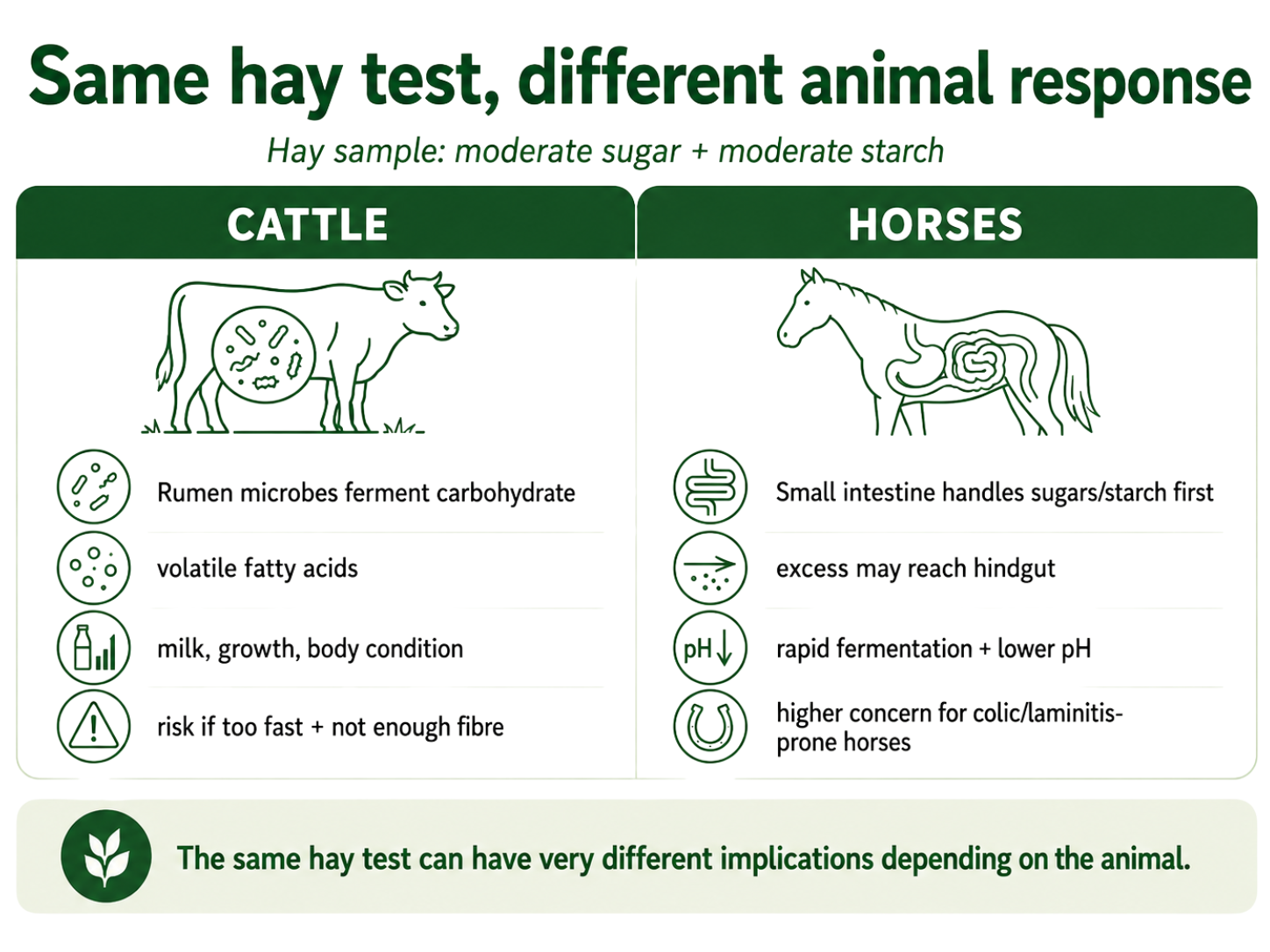
That matters because cattle and horses process feed in very different ways. Our NDF/ADF article explains that ruminants and horses both use fibre, but they ferment it in different places: cattle in the rumen and horses mainly in the hindgut. The same principle applies to sugars and starch: the number on the feed test is only useful when interpreted against the animal’s digestive system.
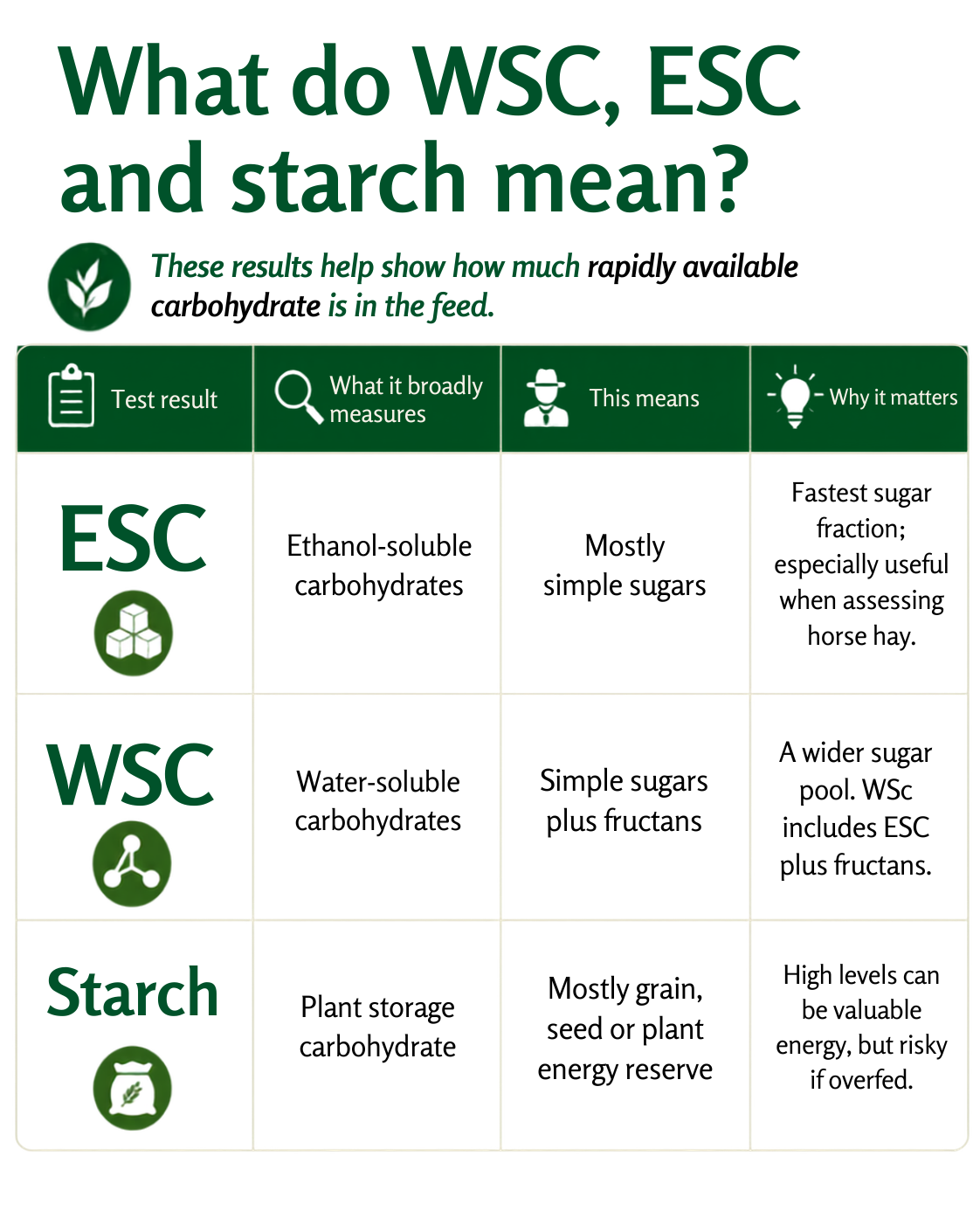
Simplistically:
- ESC (ethanol soluble carbohydrates) are the simple sugars.
- WSC (water soluble carbohydrates) includes ESC plus fructans.
- Starch are the more complex-stored glucose, largely found in grains.
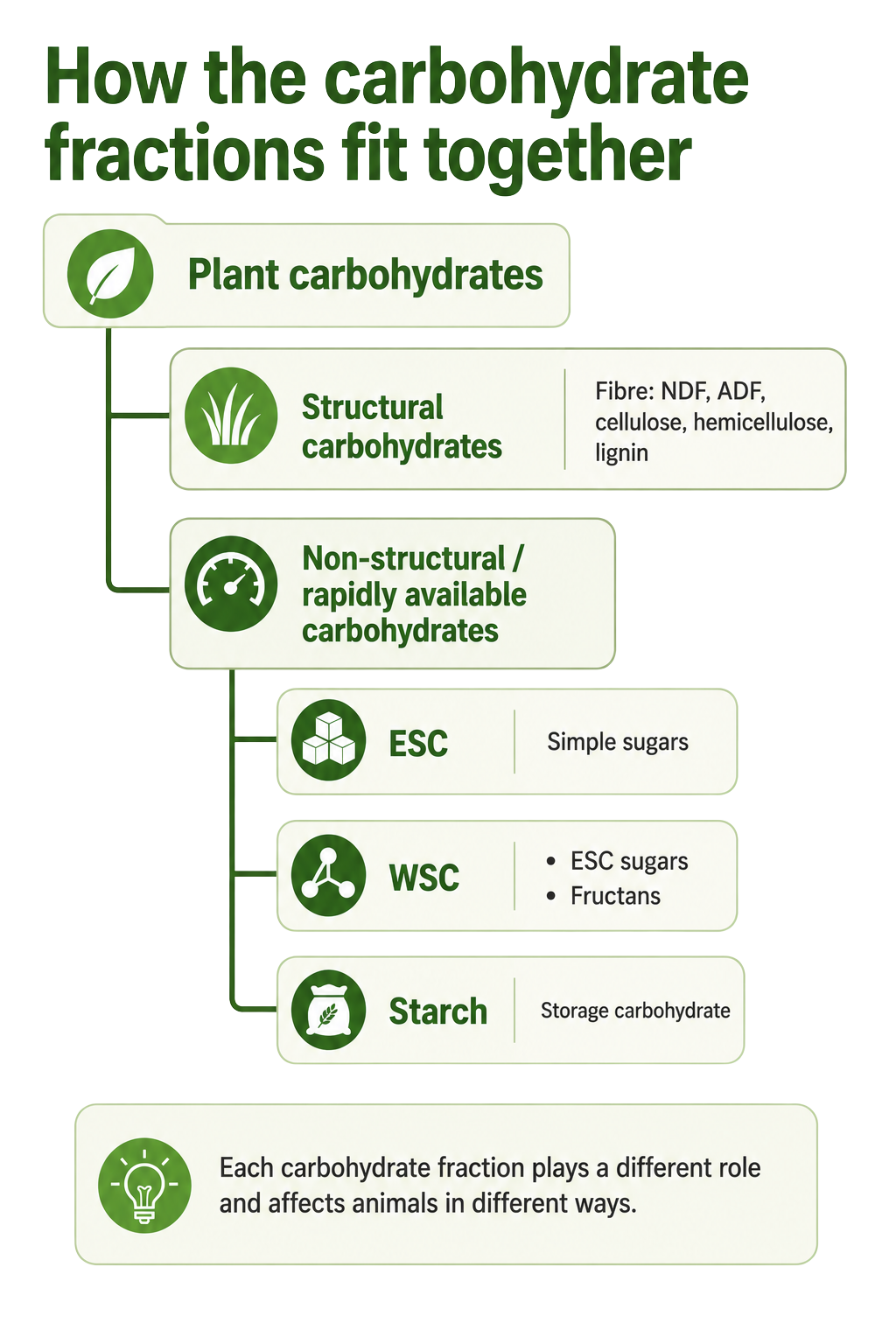
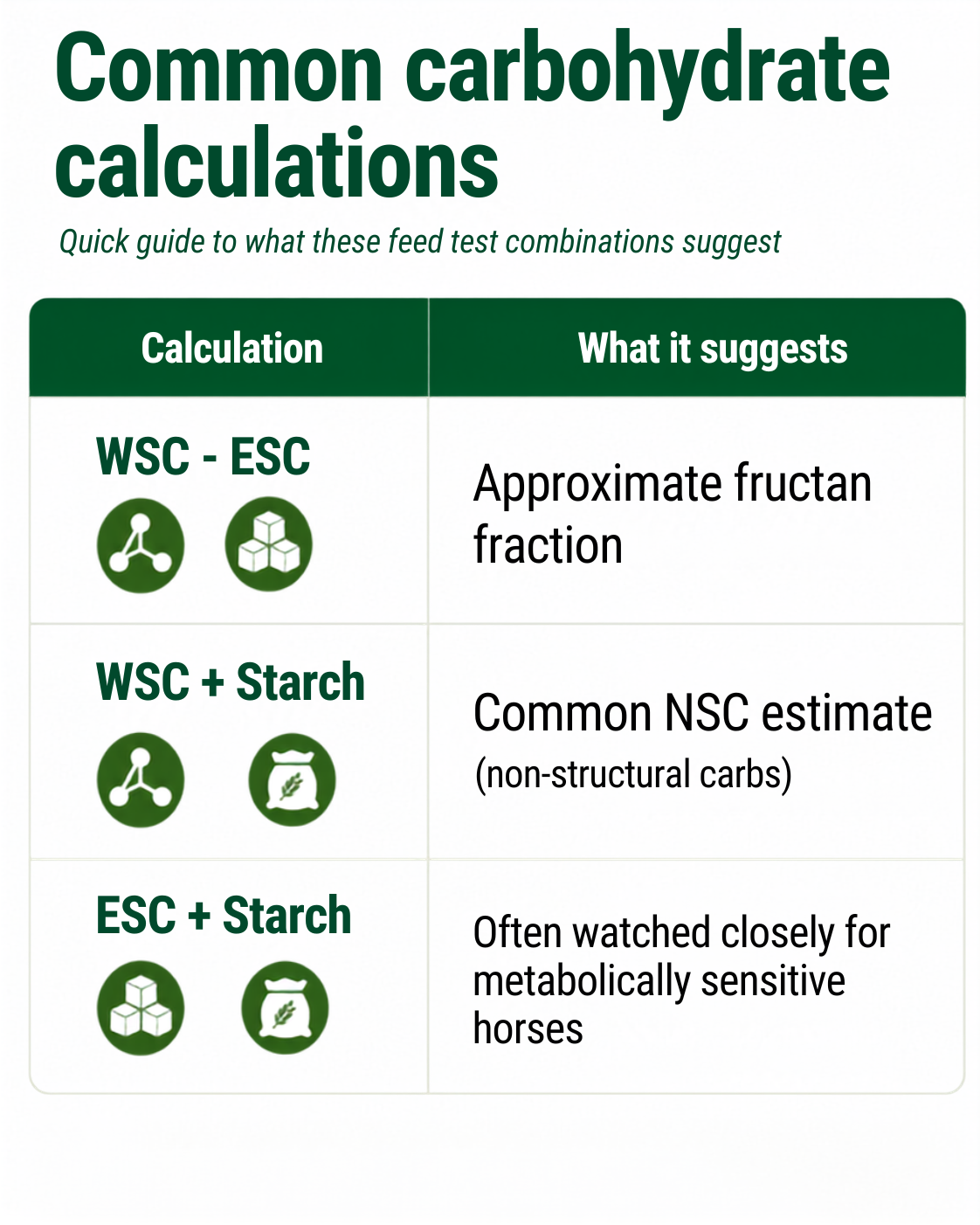
Relatedly, a feed test report may reference NSC. NSC (non-structural carbohydrates) is commonly interpreted as WSC + starch, while NFC is a broader category, including starch, sugar, pectin and fermentation acids, calculated as 100% – (CP% + (NDF% -NDICP%) + Fat% +Ash%).**Don’t confuse NSC with NFC on your feed test report, they mean very different things!
For horses, NSC is often more important as this is the energy absorbed primarily by the simple stomach. For ruminants, NFC is often more useful because it helps describe fermentable energy available to rumen microbes.
When comparing feed results, ensure that you are aware of how the results are reported – either on an “as fed” or “dry matter” basis. The “as fed” number includes the water portion of the sample diluting the nutrients, while “dry matter” reports exclude the moisture portion from the results. As animals eat to meet their nutrient requirements, it is best practice to compare results on a DM basis.
Why cattle often handle these numbers differently
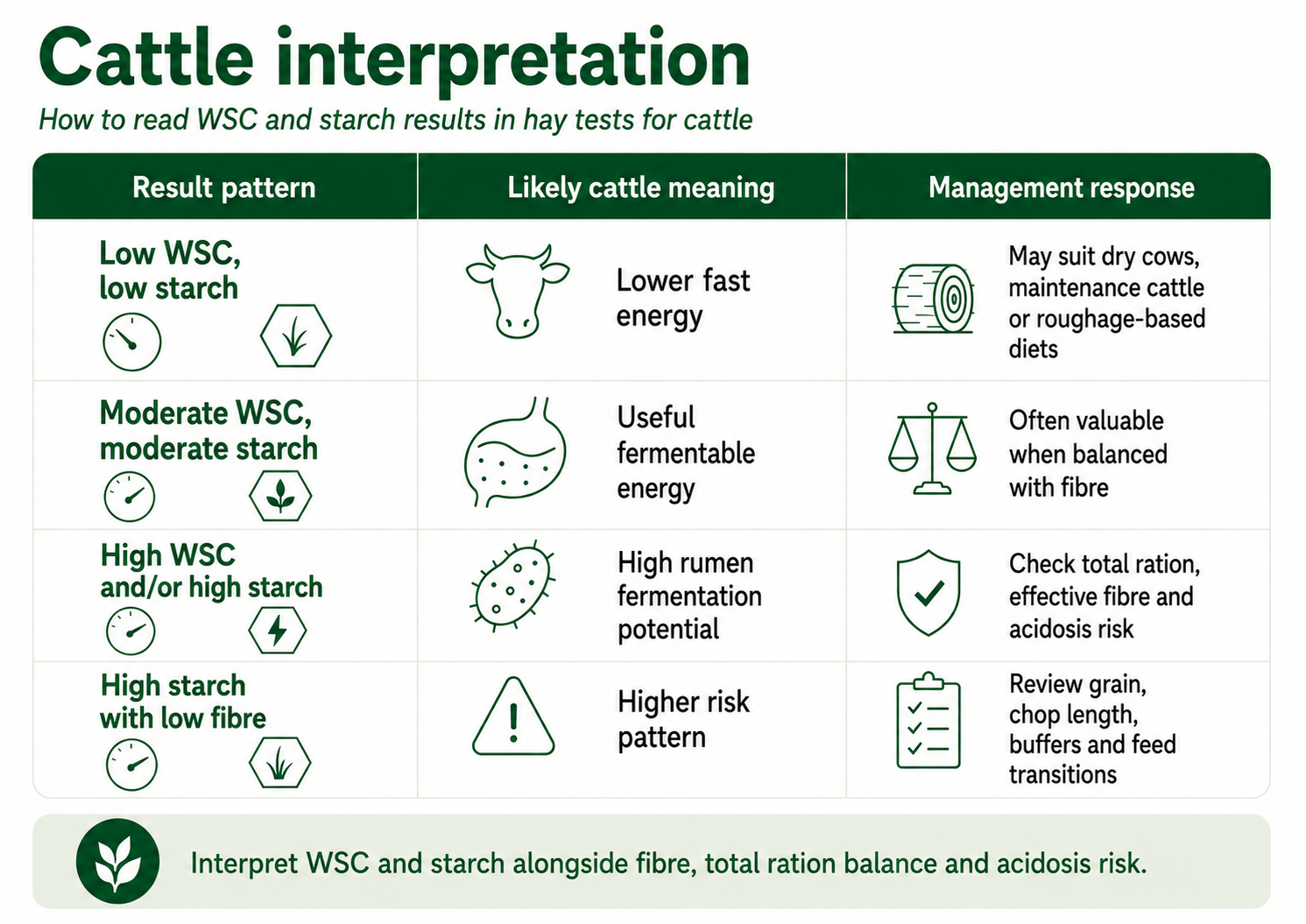
For cattle, WSC and starch can be useful. They help rumen microbes grow, support milk production or weight gain, and can improve the overall energy density of the diet.
The risk is speed. Sugars and finely processed starch ferment quickly. If the ration is high in rapidly fermentable carbohydrate and low in effective fibre, rumen pH can fall. That can reduce fibre digestion, depress intake and increase the risk of acidosis. In other words, cattle can make excellent use of these carbohydrates, but they still need a balanced rumen environment. Balancing WSC and starch with physically effective fibre, protein, dry matter intake is important for optimal production.
Why horses need extra caution
Horses are also able to ferment their feed, but this occurs in the hindgut rather than the foregut like cattle; this means the way they utilise nutrients are vastly different. In equines, feed firstly travels through the stomach and small intestine, where the animal absorbs the protein, sugars, fats vitamins & minerals – these are nutrients directly available to the animal. Feed then travels into the caecum and colon where fibre digestion (via microbial fermentation) and water absorption takes place.
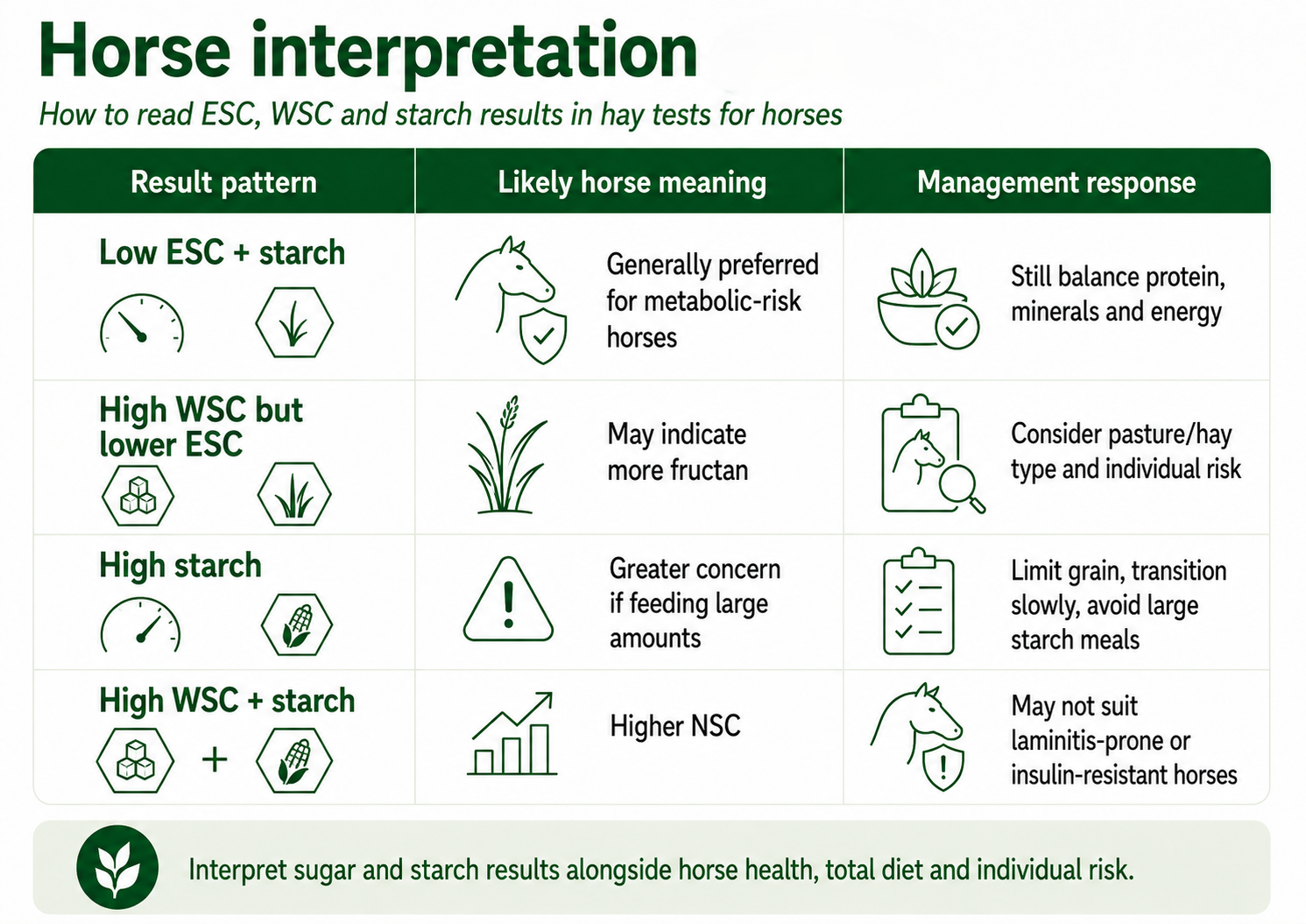
Issues occur when excess sugar and starch are present, escaping from the foregut to the hindgut and upsetting the microbial balance, potentially contributing to hindgut acidosis, laminitis and colic risk. Fructans are a more complex structure which is digested in the hindgut (and why WSC, which contains fructans is an important consideration when evaluating diet quality).
This is why horse owners, especially those managing ponies, easy keepers, laminitis-prone horses, insulin-resistant horses or horses with equine metabolic syndrome (EMS), often pay very close attention to sugar and starch results.
A typical rule is that NSC should be less than 10% for horses predisposed to laminitis or EMS. Fructans are higher in cool season grasses, so be mindful of feed during late autumn, winter to early spring.
A simple worked example
Imagine two hay samples on a dry matter basis:
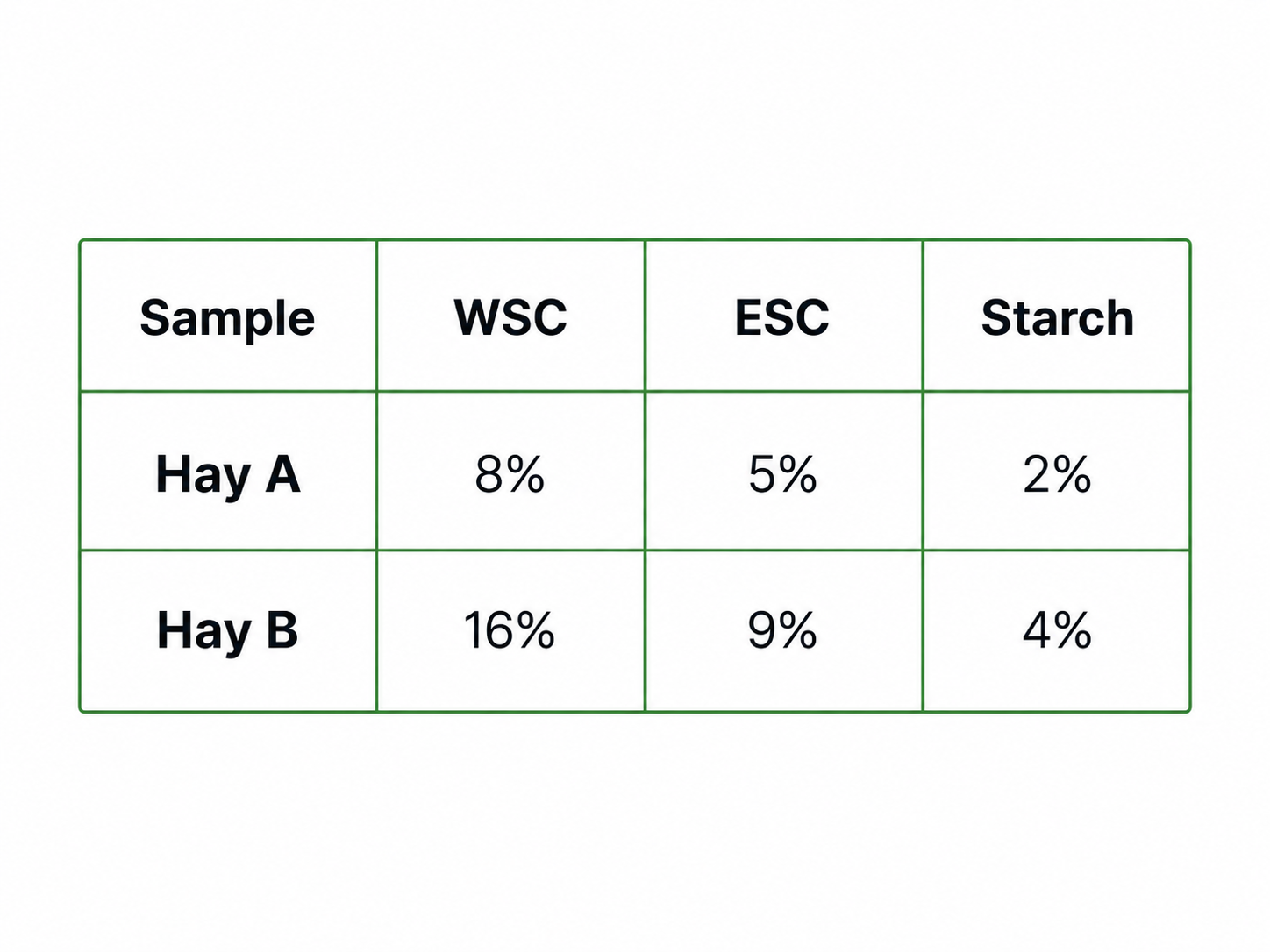
For a growing steer or lactating cow, Hay B may provide useful fast energy, provided the total ration has enough fibre and is introduced properly. For an easy-keeping pony or laminitis-prone horse, Hay B may be too high risk, because ESC, WSC + starch are materially higher.
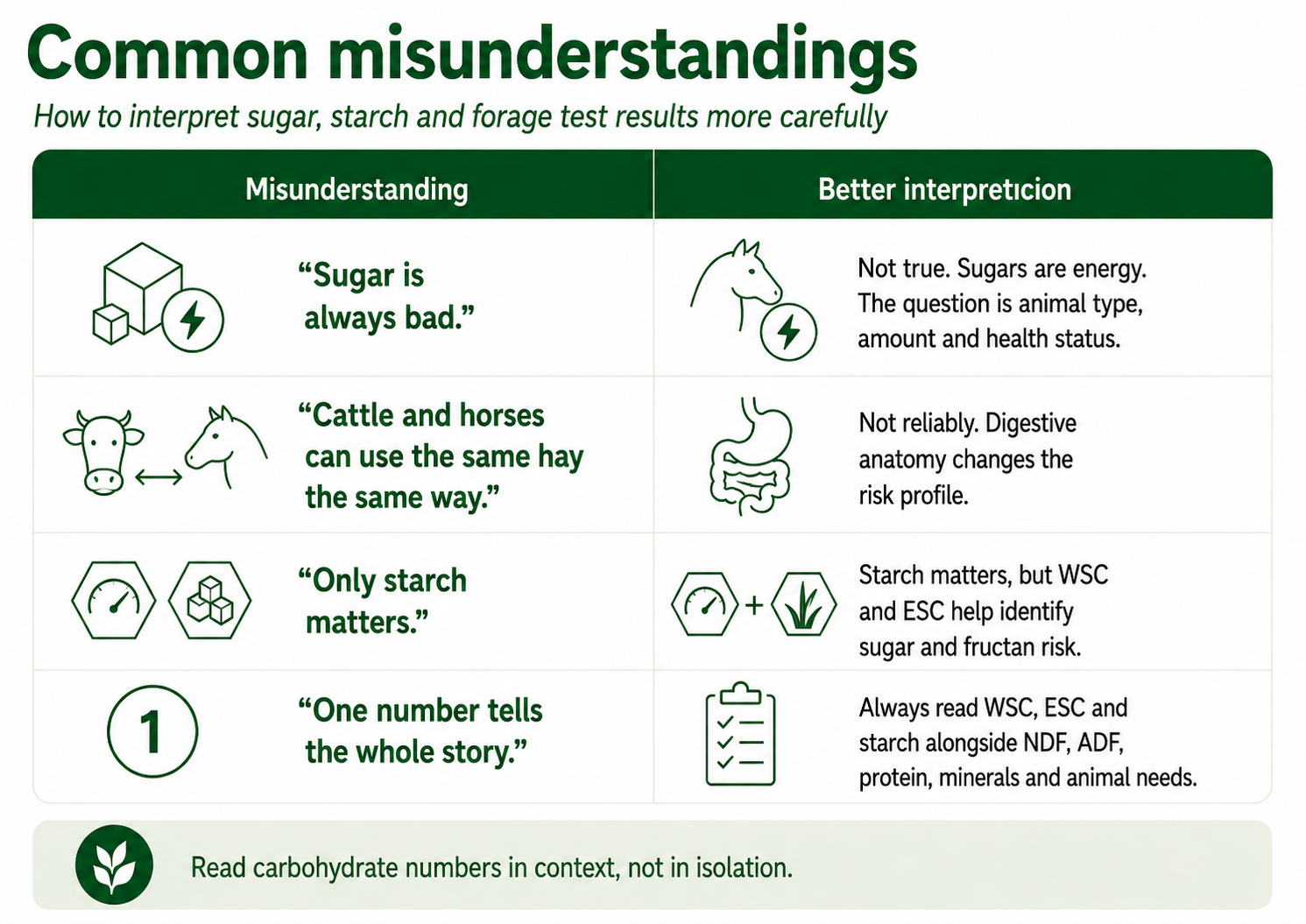
That does not mean Hay B is “bad hay”. It means it needs the right home. Feed tests help match forage to the animal.
Practical takeaway
When reading a feed test certificate:
- Check if results are on a dry matter basis. Dry matter comparison is the fairest way to compare feeds.
- For cattle, view WSC and starch as fermentable energy, then check the whole ration for fibre, grain level and acidosis risk.
- For horses, especially laminitis-prone or metabolic horses, pay close attention to ESC, WSC & starch.
- Match the hay to the job. The same bale may be a useful energy source for cattle but unsuitable for a sensitive horse.