WHAT IS LUCERNE HAY?
Lucerne hay is a very common variety of hay that is used by cattle and horses across Australia. You may have questions about this type of hay, including how saleable it is. What exactly is lucerne hay?
Lucerne hay, also known as alfalfa hay, is a highly nutritious forage that is commonly used as a feed for livestock such as horses, cattle, and goats. The plant is a member of the pea family and is native to the Mediterranean region, but it is now widely cultivated around the world. Lucerne hay is known for its high protein content, which can range from 12 to 20 percent, and its high digestibility, which makes it an excellent choice for animals that need to maintain a healthy weight and muscle mass.
This ultimate guide to lucerne hay will tell you everything you need to know, including more about what lucerne is and where it comes from, how it’s different than hay, whether lucerne is better, and more pros and cons. Let’s begin!
WHAT IS LUCERNE HAY?
Lucerne hay, as we touched on in the intro, comes from the Medicago sativa plant in the Fabaceae family and the Medicago genus according to the Department of Primary Industries and Regional Development.
One of the key benefits of lucerne hay is its high protein content, which is essential for the growth and maintenance of muscle tissue. This makes it an ideal feed for growing animals, as well as for adult animals that are being used for work or competition. The high digestibility of lucerne hay also means that animals are able to extract more nutrients from their feed, which can help to reduce feed costs.
Additionally, lucerne hay is rich in minerals and vitamins, including calcium, phosphorus, and vitamins A and D, which are essential for the health and wellbeing of animals.
Lucerne hay is also known for its high fiber content, which can range from 20 to 30 percent. This makes it an excellent choice for animals that need to maintain a healthy digestive system. The high fiber content of lucerne hay can help to keep the gut functioning properly, which can help to prevent digestive problems such as colic. Additionally, the high fiber content of lucerne hay can help to keep animals feeling full and satisfied, which can help to reduce the risk of obesity and other weight-related health problems.
Another benefit of lucerne hay is its high energy content, which can range from 1.5 to 2.5 Mcal/kg. This makes it an excellent choice for animals that need to maintain a high level of energy, such as working horses or dairy cows. The high energy content of lucerne hay can also help to keep animals warm during the colder months of the year, which can help to reduce the risk of hypothermia and other cold-related health problems.
When it comes to feeding lucerne hay to your animals, it is important to be aware that it is a rich feed, so it should be introduced gradually to the animal’s diet. It’s also important to note that it should not be fed to pregnant mares, as it can cause premature lactation and delivery. Also, as with any hay, it should be checked for mold, dust, and any other contaminants that could be harmful to the animal.
Here is a video showcasing lucerne.
The seedlings that sprout from lucerne are both slow-growing and small. It takes months for a crown to form atop the root system.
What does Lucerne look like?
Well, that changes over the life of the crop.
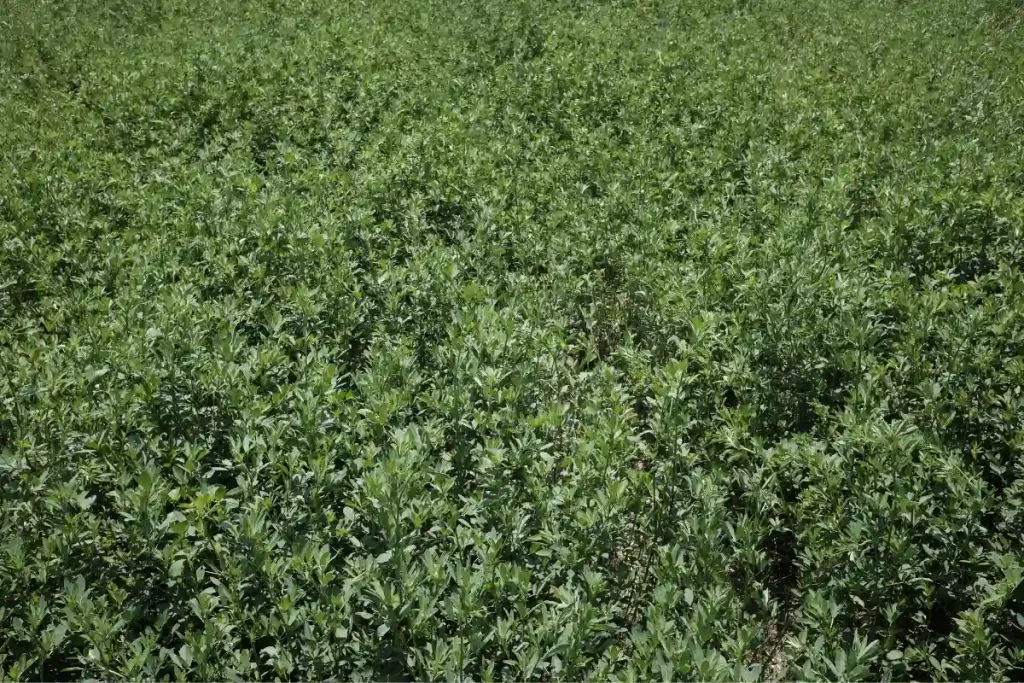
When lucerne is young, it looks like a clover. The leaves later turn round and are trifoliate, then later still, the leaves are longer than they are rounder. Lucerne can develop lilac-colored flowers if the crop blooms, notes Pastures Australia.
The flowers give way to fruits that contain between 10 and 20 seeds. However, the seeds possess autotoxicity, which means that lucerne has a difficult time growing from more lucerne.
When the time comes to harvest lucerne into hay, it’s used to feed cattle and livestock like horses, which is something we’ll talk about in a lot more detail as we go through this guide. Be sure to check it out!
THE PROS OF LUCERNE
Lucerne hay remains one of the most valuable forage feeds used across Australian livestock industries. Known for its high protein content, digestibility and versatility, lucerne is widely used in cattle, dairy and horse feeding systems to support animal performance, feed efficiency and overall health.
Whether used for grazing, hay or silage, lucerne provides significant nutritional and management benefits across a range of farming conditions.
Excellent Nutritional Value
Lucerne is regarded as one of the most nutritionally balanced forage feeds available.
High-quality lucerne hay typically contains:
- High Crude Protein (18–25%)
- Digestible fibre
- Good metabolisable energy (ME)
- High calcium levels
- Potassium and magnesium
- Essential amino acids including lysine
Which supports:
- Muscle development
- Milk production
- Weight gain
- Fertility
- Recovery and maintenance
For producers using NIR feed testing, lucerne consistently rates highly for feed quality and digestibility when harvested and stored correctly.
Benefits of Lucerne for Cattle
Lucerne hay is widely used in Cattle production and dairies.
Its combination of protein, energy and digestible fibre supports:
- Higher dry matter intake
- Improved rumen function
- Better feed conversion efficiency
- Increased milk production
- Faster liveweight gain
Lucerne also provides physically effective fibre, helping support chewing activity, saliva production and rumen buffering.
Benefits of Lucerne for Horses
Lucerne hay is suitable for a wide range of horses, its high-quality protein and digestible fibre help support:
- Muscle condition
- Energy levels
- Recovery from work
- Digestive health
Lucerne fibre can also help increase saliva production, which may assist in reducing gastric acidity and supporting gut health.
Versatility Across Farming Systems
One of lucerne’s greatest strengths is its flexibility across different production systems.
Lucerne can be used successfully as:
- Grazing pasture
- Quality hay
- Silage
- Summer forage
- Drought reserve feed
It is particularly valuable during summer when cool-season grasses decline in quality and productivity.
Lucerne Hay and Reduced Rodent Attraction
An often-overlooked advantage of hay-based feeding systems is reduced attraction to rodents compared with heavily grain-based feeding systems.
Rodents are commonly attracted to:
- Stored grain
- Pellets
- High-starch feeds
- Feed spillages
While rodents can still shelter around hay sheds, quality lucerne hay generally:
- Contains lower free starch levels than grain
- Produces fewer concentrated feed residues
- Supports cleaner feeding systems
- Allows easier visual inspection for contamination
When stored correctly, lucerne hay can contribute to improved feed hygiene and lower contamination risk.
Benefits of Reduced Rodent Activity
Reducing rodent activity around feed storage areas provides benefits for both livestock and people.
Animal Health Benefits
Lower rodent contamination may help reduce the risk of:
- Salmonella
- Leptospirosis
- Feed spoilage
- Urine and faecal contamination
Cleaner feed supports:
- Better feed intake
- Improved feed efficiency
- Reduced disease exposure
Human & Workplace Benefits
Lower rodent populations also contribute to:
- Improved workplace hygiene
- Reduced biosecurity risks
- Safer storage areas
- Cleaner working environments
Proper Storage Still Matters
To maintain feed quality, lucerne hay should be:
- Stored under cover
- Kept dry and ventilated
- Raised off the ground using pallets
- Regularly checked for pests and moisture issues
Good storage preserves nutritional value and protects the quality producers work hard to grow.
THE CONS OF LUCERNE
Whether lucerne is the ideal crop for your hay importation/exportation business depends on how important the following downsides are.
CAN REDUCE STAND QUALITY
Without sufficiently grazing the lucerne, the decline of stand quality can begin. Usually, you’ll know this is afoot because the number of weeds growing around the crop rises.
If cattle are allowed on a specific paddock once the new lucerne shoots grow, then stand decline is a given. That’s also the case when animals can graze during muddy and wet weather. The livestock can wreck the lucerne crowns.
By keeping livestock off of a particular paddock for too long or using one sacrifice paddock with high-quality grasses, the stand quality can stay as it is.
NEED FOR MORE MANAGEMENT
Rotating cattle to the appropriate pastures requires human intervention, as does overseeing the cattle to ensure they eat from the right pastures.
At the very least, your business will ensure a better rate of cattle-pasture management than you may have had before.
WHAT IS THE DIFFERENCE BETWEEN GRASS HAY AND LUCERNE?
Is grass hay and Lucerne that different? As we’ll show you in this section, the answer is yes! Here are the differences.
PROTEIN CONTENT
Livestock need high-quality protein to stay healthy and strong while excess protein may be harmful. Lucerne hay may have 15 to 21 percent protein, with the range varying depending on the crop cutting times.
Compare that to grassy hay, which may have 10 percent protein at most.
An adult horse needs 10 to 12 percent of high-quality protein while younger horses need a greater amount of protein, as do lactating horses and working or performing horses.
CALCIUM LEVELS
Calcium is for stronger bones for both humans and animals. If you did a level-to-level comparison of the calcium content in both normal hay and lucerne hay, the latter would come out with more calcium.
Timothy hay may contain about 0.38 percent calcium whereas lucerne has upwards of 1.28 percent.
FIBER CONTENT
Fiber is for satiety and can keep an animal regular. Too much fiber can have the opposite effect and potentially cause upset stomach and diarrhea.
Lucerne hay does contain less fiber than regular hay.
CALORIES
Finally, in comparing calories, lucerne hay has more calories than a serving of the same size of standard hay.
This can stretch out the quantities that your customers need to buy, as a little will take them a long way.
However, you may have to caution customers to watch a horse’s intake of lucerne, as too much can quickly cause weight gain.
A horse that eats a diet rich in grass hay can eat more of it without worrying about becoming too heavy.
IS LUCERNE BETTER THAN HAY?
Keeping the above in mind, is lucerne better than hay? Well, as we’ve proven to this point and will continue to prove in the sections to come, lucerne is a valuable food source for livestock such as cattle and horses.
VALUABLE FORAGE
It can support growing livestock, performing livestock, and livestock that’s pregnant or lactating. Lucerne has a robust nutritional profile full of calcium, protein, and the aforementioned vitamins and minerals (which we’ll go over more in the next section).
The only downside of feeding lucerne to livestock compared to hay is that lucerne is lower in fiber and higher in calories.
Since it doesn’t contain as much fiber as grass hay does, that can require a livestock animal to eat more of the lucern hay to get their fill. Grass has more fiber so an animal wouldn’t have to eat as much.
Recalling how lucerne hay has more calories per serving compared to grass hay, a farmer feeding lucerne to their livestock would have to take heed. Large quantities of hay will be much more caloric than equally sized quantities of some types of hay.
Video showing Lucerne being cut and baled in the Scenic Rim
IS LUCERNE HAY GOOD FOR CATTLE?
Should Lucerne hay be part of a cattle’s regular diet? Let’s examine the nutritional content of Lucerne to answer that question.
In some research case studies, it has been noted that beef cattle can gain 200 kg – 300 kg per acre over a season from eating regular, quality Lucerne!
CONTAINS VITAMINS A AND E
Vitamin A can support vision, hoof and skin tissue maintenance, glucose synthesis and energy metabolism, and bone formation in cattle that receive enough of it.
Further, the vitamin helps bolster immunity and keeps mucous membranes and epithelial tissue healthy.
If cattle have enough vitamin E in their diet, the animal can absorb vitamin A more efficiently. Vitamin E also builds healthy cellular metabolism and immunity.
LOW PHOSPHORUS LEVELS
Phosphorus does not affect how a cow produces milk (as well as how much) or its health. Cattle at various ages may require different levels of phosphorus, and lucerne hay is not deficient. It just lacks too much phosphorus.
FULL OF AMINO ACIDS
Lucerne hay is packed with lysine, an amino acid that may benefit cattle. The amino acid lessens how much nitrogen a cow will excrete, which is beneficial for our planet.
HIGH LEVELS OF MAGNESIUM
Feeding cattle Lucerne hay is also a good source of magnesium. Grazing cattle especially should have magnesium in their diets, as it makes the feed more digestible.
Magnesium can also raise metabolic functioning and gut absorption.
As you can see, Lucerne is packed with many great nutrients and vitamins that cattle need to perform. Lucerne is very good for cattle of all ages and we recommend exposing them to Lucerne from time to time which will help develop them further.
HOW MUCH LUCERNE DOES A DAIRY COW NEED?
Dairy cows can safely consume 2-5kg of Lucerne per day which has seen increases in milk production to 27 litres per day when combined with other good dry food. Lucerne can also help increase Butterfat by over 4%!
WHAT IS LUCERNE HAY USED FOR?
Here are some scenarios in which lucerne hay may be used.
FOR A HORSE IN PERFORMANCE ENVIRONMENT
In a performance horse that needs some fiber but more protein, lucerne can deliver just the right nutrients and supply the livestock with the required energy to be out on the field for hours.
That said, it’s critical that farmers practice moderation when feeding performance horses lucerne hay. Too much protein from the hay will hinder a horse’s performance and possibly be detrimental to their health as well.
FOR PREGNANT AND LACTATING HORSES
When a mare becomes pregnant, her diet will usually change until she gives birth. Again, the high protein content of lucerne hay makes it an excellent feed source for a mare as her baby grows.
Further, the lysine and calcium in the hay–both of which lucerne is rich in–can keep a mare healthy during her pregnancy so she can produce vigorous offspring.
When the mare is lactating, she must have a diet rich in protein, amino acids like lysine, and calcium as well.
FOR GROWING HORSES
As the young horse grows, the digestible energy in lucerne hay will support them until they reach maturity. The lysine and protein in lucerne are beneficial too, as is the calcium, which is beneficial for growing horses.
IS ALFALFA HAY THE SAME AS LUCERNE HAY?
Lastly, we just want to clear up a little confusion that sometimes arises when referring to Lucerne hay, especially if your hay importation or exportation business has customers around the world.
In Australia, New Zealand, South Africa, and the United Kingdom, this type of hay is known as Lucerne. Across North America, it’s referred to as alfalfa.
Despite the name difference, it’s the same type of hay!
CONCLUSION
In conclusion, Lucerne hay is an excellent choice for feeding livestock, due to its high nutritional value and digestibility. It is an ideal feed for growing animals, as well as for adult animals that are being used for work or competition.
Its high protein, fiber, and energy content make it a valuable addition to the diet of any animal. It should be introduced to the animal’s diet gradually and checked for any contaminants before feeding. With proper management, lucerne hay can help to improve the health and well-being of your animals and reduce feed costs
LUCERNE HAY FOR SALE AND PRODUCTS
If you are in need of some quality lucerne hay, see our sale listing of fully feed tested hay ready for delivery.